In 30 seconds
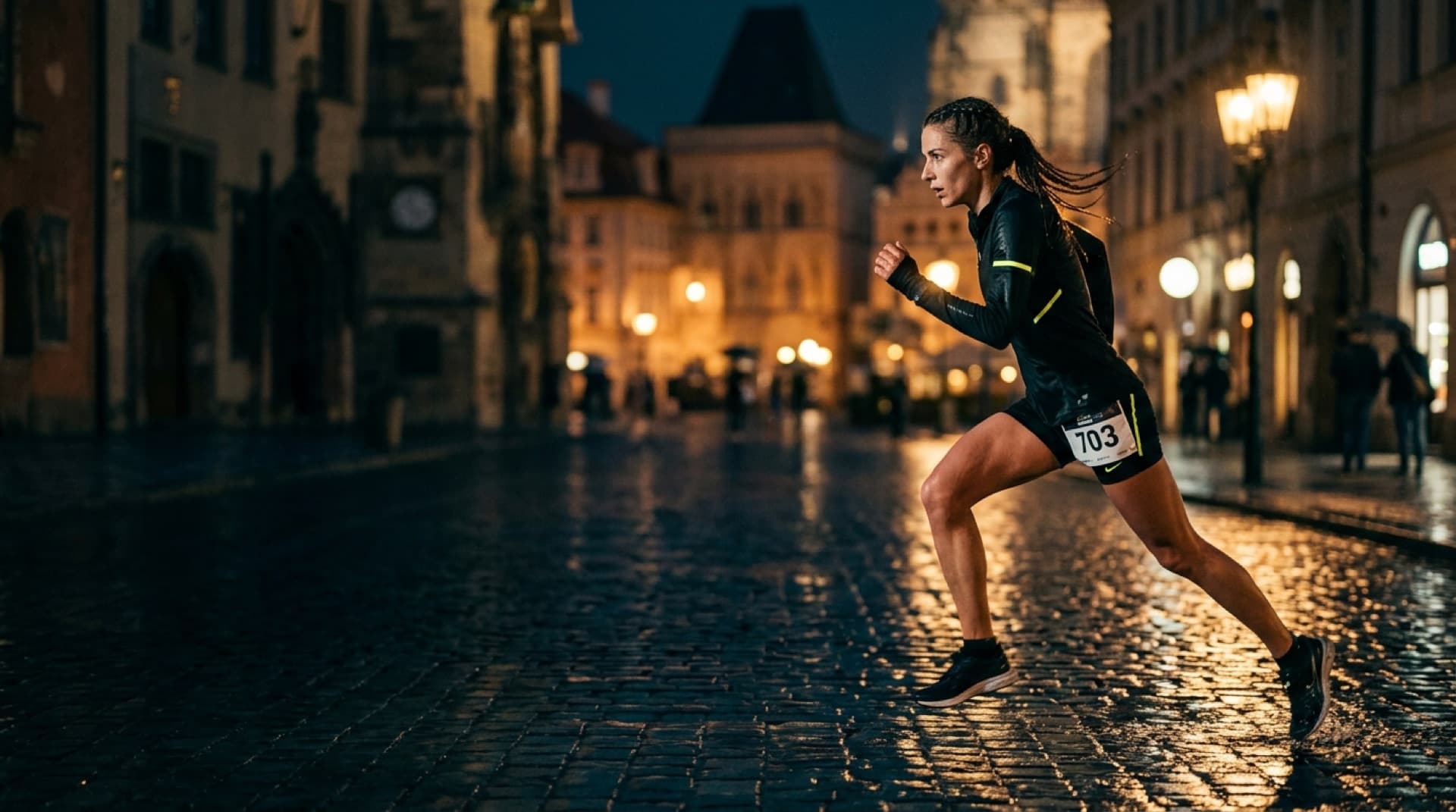
In 2026, sports photos are no longer sorted by hand. AI detects faces and reads bib numbers in real time, so every participant finds their photos in 15 seconds with a selfie or their race number.
This guide explains how the technology works, what GDPR allows, how it changes the photographer's job and the experience organizers can offer, and how to choose a platform without regretting it.
The context
Why AI is transforming sports photography
Every weekend in France alone, thousands of road races, trail races, triathlons and cycling events bring together hundreds of thousands of participants. Behind every finish line, photographers capture those moments of effort. But until recently, sorting and distributing those photos remained a logistical nightmare.
A sports photographer shoots 500 to 5,000 photos per event on average. At a big marathon, a full team can reach 50,000 photos. The technical challenge has always been the same: matching every photo to the right runner.
Traditional methods and their limits
- ▸Sorting by hand : hours, sometimes days, spent reading bib numbers photo by photo.
- ▸The dump-it-all gallery : participants scroll through hundreds of pages to find their shots — half of them give up along the way.
- ▸Timing checkpoints : accurate, but limited to a few points on the course, and useless for sports without a timing chip.
A participant who receives their photo within an hour of finishing is 5 times more likely to buy it than one who waits three days.
AI solves all three limits in one move: it identifies, indexes and serves photos in near real time.
Related article
How AI is revolutionizing sports photography in 2026 — the big picture of the shift under way.
The legal framework
GDPR and biometrics: what the law says
Yes, face recognition is legal in Europe
As long as you respect the 4 pillars of GDPR compliance: consent, purpose, retention and security.
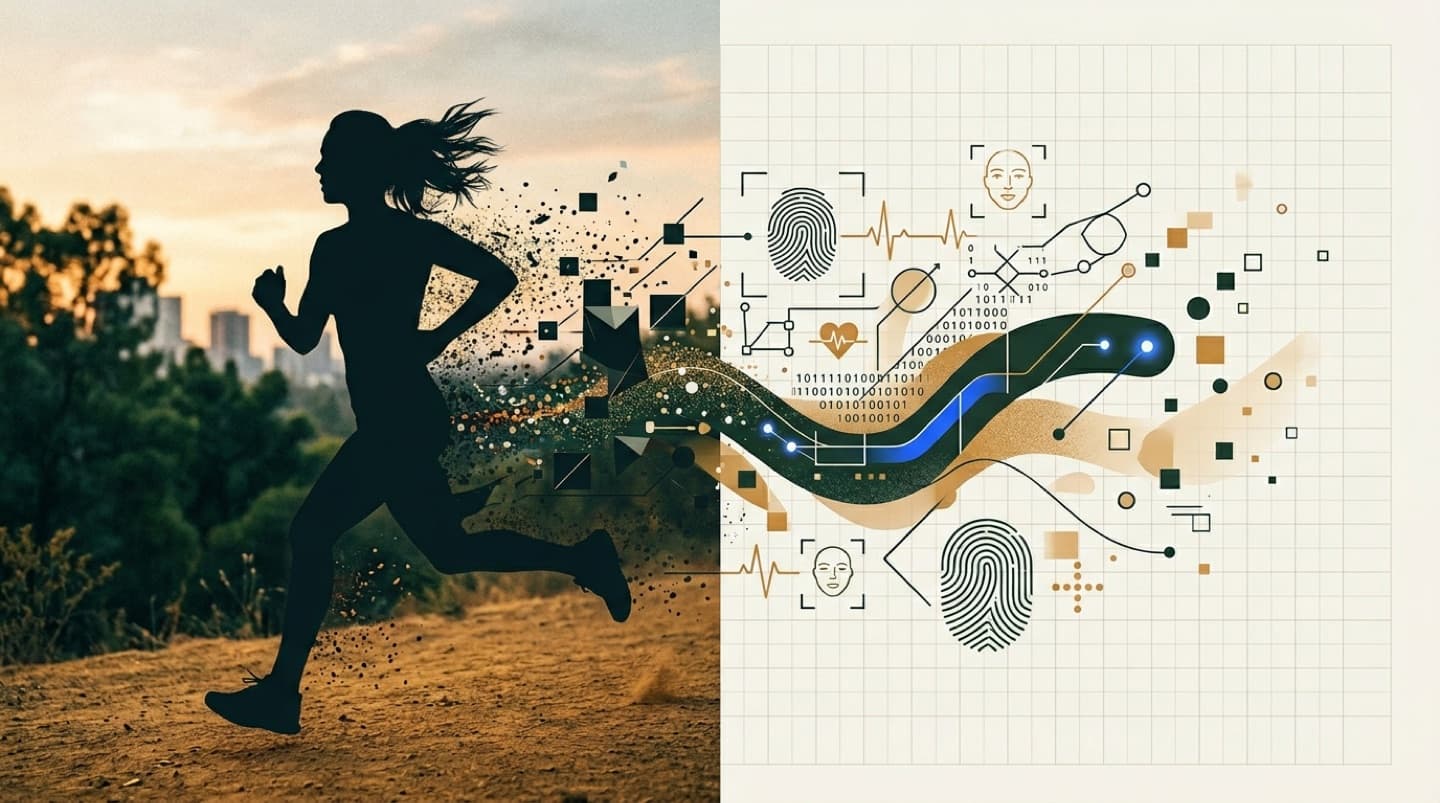
This is probably the most misunderstood topic of all. Face recognition counts as biometric data under GDPR, which puts it in the category of especially sensitive data. But the regulation does not ban it — it frames it.
The 4 pillars of compliance
- 01
Explicit consent
The participant has to actively accept the use of face recognition to search for their photos. A pre-ticked box is not enough. Bib number search always stays available as an alternative.
- 02
Limited purpose
Biometric vectors serve exactly one purpose: helping people find their own photos. No advertising use, no resale, no cross-referencing with other databases.
- 03
Limited retention period
Embeddings must not be kept any longer than necessary. Photag deletes them automatically at the end of the sales period.
- 04
Secure storage
European hosting, encryption in transit and at rest, and immediate erasure on request.
Paradoxically, AI is more protective of privacy than an open public gallery. When an organizer posts 5,000 photos on Facebook, anyone can see every participant's face. With an AI platform, each participant only sees what concerns them.
Reference article
GDPR and face recognition in sports photography — the detailed article that answers every legal question.
Behind the camera
For photographers: workflow & revenue
The job of a sports photographer has long been ruled by one reality: post-production often took longer than the shoot itself. A day on a trail race means 6 hours in the field… then 12 hours sorting that evening and the next day. AI flips that ratio.

The AI workflow in 3 steps
During the event
You shoot
Focus on the emotion and the action. The AI puts no constraints on where you stand or how you frame.
That same evening
Bulk upload, and AI takes over
You transfer your raw files or JPEGs. The system detects faces, reads bib numbers and indexes everything. Nothing to do by hand.
During and after the race
You get paid
Participants buy on their own. You follow sales in real time. Payouts are triggered whenever you ask for them.
How the revenue adds up
Speed drives conversion directly. 5 times more sales when the photo lands within the hour, compared with the several-day wait of a manual workflow. At equal event size, a photographer equipped with AI regularly out-earns one working the classic way — not because they charge more, but because they sell to far more people.
Go deeper
Sports photographer workflow — cut your post-production time by 10 with AI.
Go deeper
Making more money from sports photography — the concrete levers to grow your revenue.
Behind the event
For organizers: elevating the experience
For an organizer, photos are not a side service — they are a spin-off product with huge emotional impact. The memory of the finish line, of the forced smile at kilometer 32, of the last sprint out of the final bend. Give your participants those images right away, and you turn a sports event into a shared moment that lives on long after the race.
Three concrete levers
Participant engagement
Sponsor visibility
Event marketing
The opposite is just as true: a painful gallery (search by finishing time, a wait of several days, cut-rate quality) leaves a bad taste. It is often the last point of contact between an organizer and their participants — you may as well make it a good one.
Go deeper
Organizing a sports event: why automatic photo sorting changes everything.
Go deeper
The participant experience — how instant photos make an event a success.
Go deeper
Event marketing — participant engagement through AI photography.
Go deeper
Sponsors and sports photography — maximizing visibility with AI.
The decision
How to choose your platform
Three families of solutions coexist on the sports photography market today. Picking the right one depends on volume, on how strict you are about GDPR, on how much time you want to spend on post-production, and on the business model you are aiming for.
Here are the criteria that really matter, compared across three typical approaches.
| Criterion | #1 PhotagAI · Face recognition + OCR | #2 Generic galleryGoogle Photos · WeTransfer | #3 Manual sortingThe traditional method |
|---|---|---|---|
01 Face recognition (selfie) Participants find their photos with a selfie | |||
02 Automatic bib number detection OCR on every photo, no manual entry | Partial | ||
03 Time until photos are available | A few minutes | Hours to days | 3 to 7 days |
04 GDPR compliance for biometrics Vectors auto-deleted after the sale | Needs setup | ||
05 Built-in checkout (Stripe) | |||
06 Cost to get started | €0 (Launch) | Varies | Photographer's time |
07 Mobile experience for participants | Varies | ||
| Score | 5.0/ 8.0 | 1.5/ 8.0 | 1.0/ 8.0 |
Photag
AI · Face recognition + OCR
- Face recognition (selfie)
- Automatic bib number detection
- Time until photos are availableA few minutes
- GDPR compliance for biometrics
- Built-in checkout (Stripe)
- Cost to get started€0 (Launch)
- Mobile experience for participants
Generic gallery
Google Photos · WeTransfer
- Face recognition (selfie)
- Automatic bib number detectionPartial
- Time until photos are availableHours to days
- GDPR compliance for biometricsNeeds setup
- Built-in checkout (Stripe)
- Cost to get startedVaries
- Mobile experience for participantsVaries
Manual sorting
The traditional method
- Face recognition (selfie)
- Automatic bib number detection
- Time until photos are available3 to 7 days
- GDPR compliance for biometrics
- Built-in checkout (Stripe)
- Cost to get startedPhotographer's time
- Mobile experience for participants
The questions to ask before you sign
- ▸Where are the photos and the biometric vectors hosted? (the answer should be in Europe)
- ▸What is the automatic purge policy for biometric embeddings?
- ▸Is the payment module built in, or do you have to plug one in yourself?
- ▸What commission is taken on each sale? Is there a fixed subscription on top?
- ▸Is there a manual review tool for the rare cases where the AI does not identify a participant?
- ▸Is the participant's mobile experience genuinely optimized, or just a desktop site hastily squeezed onto a phone?
FAQ
Frequently asked questions
In short
Sports photography entered a new era in 2026. AI does not replace the photographer's talent — it frees up their time, multiplies their revenue, and finally puts those memories within reach of every participant.
The technology
How AI recognition works
Three technologies come together in a modern sports photography platform: bib number detection with OCR, biometric face recognition, and an instant search engine. Here is how.
What the AI sees
Bib number OCR
Face recognition
Instant search
Bib number detection (adaptive OCR)
Classic OCR (optical character recognition) is not enough for sports photography. Bibs get twisted by the wind, creased by sweat, sometimes hidden behind an arm. Modern AI uses computer vision models trained specifically on this kind of image — it infers the number even when a digit is missing, using the surrounding context.
Biometric face recognition
The principle is simple to explain but technical to implement. Every face detected in a photo is turned into a vector with several hundred dimensions — its embedding. Two identical faces produce vectors that sit close together. When a participant uploads their selfie, the algorithm measures the distance between their embedding and every indexed one. The closest photos come back in under 100 ms.
The winning combo: OCR + face
Taken separately, each model has its limits. Bib hidden? OCR fails. Runner turning their head 90°? Face recognition fails. Combined, they cover more than 95% of cases at a typical event. The rare unidentified photos are surfaced in a manual review tool, where they get sorted within minutes.
Go deeper
Getting the most out of AI recognition in sports photography — the shooting habits that maximize the detection rate.
Go deeper
Never miss a single photo — how AI guarantees perfect identification, even in difficult conditions.